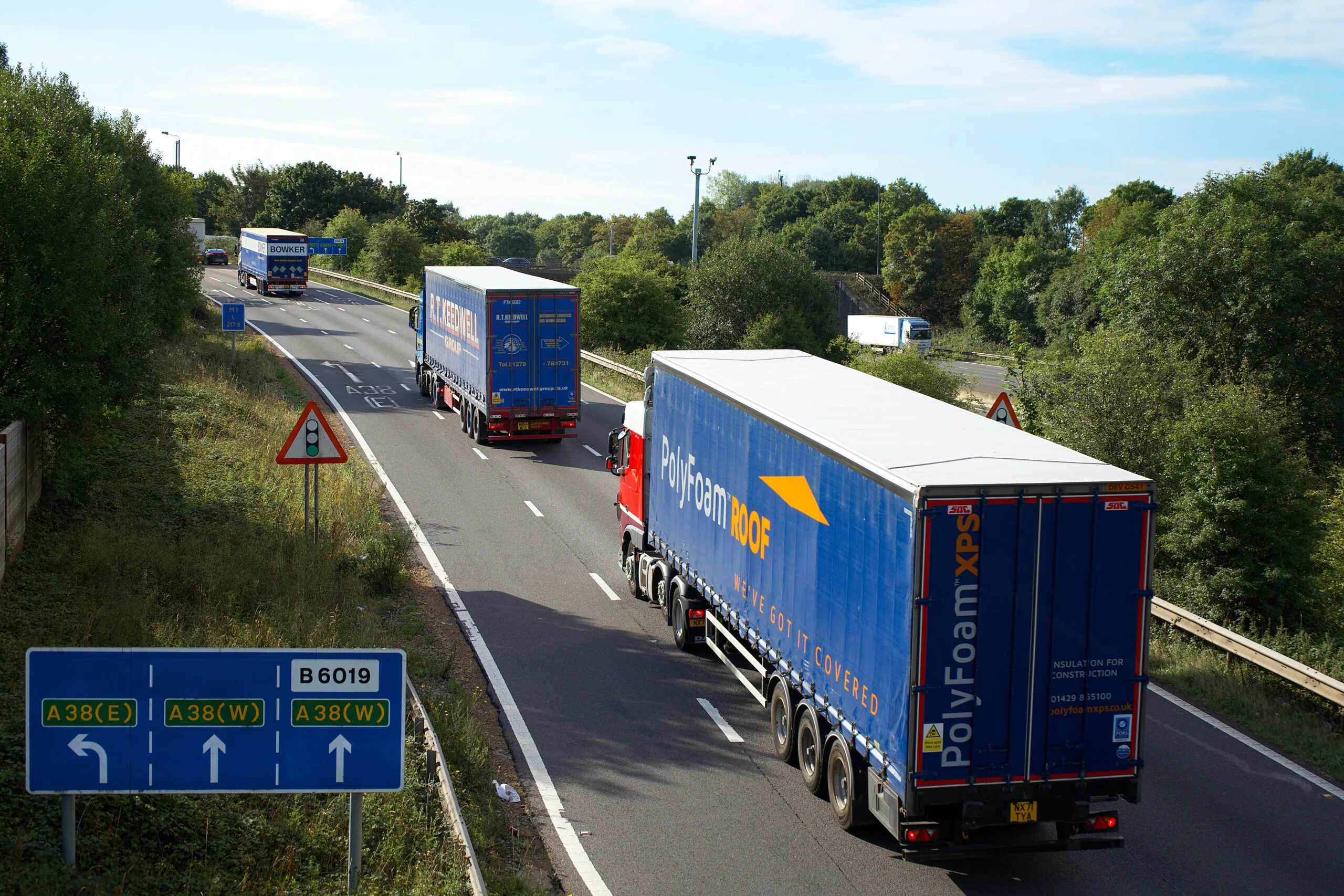
Walk into any logistics control room today and you’ll see the same thing: teams working at full stretch, juggling a constant stream of decisions, updates, exceptions, and customer demands. Screens everywhere. Phones ringing. Drivers calling in. Customers chasing ETAs. Planners reworking schedules. Dispatchers firefighting the latest disruption.
It’s a high‑pressure environment where decisions need to be made quickly — and made right.
And this is exactly where the conversation around AI in logistics is changing.
For years, AI has been framed as a tool for automation: reducing admin, handling routine tasks, and improving efficiency. All of that still matters. But the real shift happening now — the one that will define the next generation of logistics operations — is how AI is starting to support human decision‑making in the moments where it matters most.
AI agents are becoming the digital colleagues that dispatchers, planners, and customer service teams didn’t know they needed. Not replacing them, but giving them the clarity, context, and confidence to make better decisions, faster.
This is the story of how logistics is moving beyond automation — and into augmentation.
The Real Challenge: Decision‑Making Under Pressure
Let’s be honest: logistics teams are not short of skill. They’re short of bandwidth.
The modern logistics environment demands more decisions, made more quickly, with more variables, and with less margin for error. And the pressure is only increasing.
Dispatchers are balancing driver hours, traffic conditions, customer priorities, and real‑time disruptions — often simultaneously. Planners are trying to optimise loads, routes, and capacity while the plan changes beneath their feet. Customer service teams are expected to provide instant, accurate answers in an environment where information is constantly shifting.
The problem isn’t capability. The problem is cognitive overload.
Too many systems. Too much data. Too many moving parts. Too little time.
And when the pressure spikes — a delayed vehicle, a missed slot, a weather disruption, a customer escalation — the quality of decision‑making can drop simply because humans can only process so much at once.
This is where AI agents make a meaningful difference.
AI Agents: The Shift From Automation to Intelligence
When people hear “AI agent”, they often think of automation: chatbots answering questions, workflows triggering automatically, routine tasks being handled in the background.
But the real value of AI agents is not that they automate tasks — it’s that they enhance judgement.
AI agents act as real‑time intelligence layers that sit across your operation. They don’t just do things. They interpret what’s happening. They connect information that’s otherwise siloed. They surface insights that humans would struggle to spot under pressure. And they support the decisions that matter most.
Think of them as an always‑on operational analyst — one that never gets tired, never misses a signal, and never needs to “check another system”.
Let’s break down how this plays out for different teams.
How AI Agents Support Dispatchers
Dispatchers operate in one of the most reactive environments in logistics. They’re constantly balancing:
- driver availability
- traffic conditions
- customer priorities
- route constraints
- unexpected disruptions
AI agents help by giving dispatchers something they rarely have: real‑time situational awareness without the noise.
- A single, coherent operational picture
Instead of switching between TMS, telematics, emails, and tracking portals, dispatchers get consolidated insights delivered directly to them.
- Early warning signals
AI agents detect anomalies — a slowing vehicle, a route deviation, a weather alert — and flag them before they escalate.
- Actionable recommendations
Not decisions made for them, but options: “Traffic ahead. Reroute via X.” “Driver nearing hours limit. Reassign to Y.”
- Reduced cognitive load
Routine updates, notifications, and customer messages are handled automatically, freeing dispatchers to focus on the decisions that genuinely require human judgement.
In a high‑pressure control room, this is transformative.
How AI Agents Support Planners
Planning is where logistics becomes a strategic puzzle. Planners are constantly trying to optimise:
- loads
- routes
- capacity
- timing
- compliance
- cost
And they’re doing it in an environment where the plan is rarely static for more than an hour.
AI agents enhance planning by acting as a real‑time optimisation partner.
- Instant constraint analysis
AI can evaluate thousands of variables in seconds — something no human can do manually.
- Continuous optimisation
AI agents highlight inefficiencies: under‑utilised vehicles, suboptimal routes, unnecessary empty miles.
- Scenario simulation
“What if we move this delivery?” “What if we consolidate these loads?” “What if we shift this route by 30 minutes?” AI provides instant feedback.
- Rapid re‑planning
When disruptions hit, AI agents can generate revised plans in real time, allowing planners to respond with confidence rather than scrambling.
This shifts planning from reactive firefighting to proactive optimisation.
How AI Agents Support Customer Service Teams
Customer service teams are often the first to feel the impact of operational issues — and the last to receive accurate information.
AI agents change that dynamic completely.
- Instant access to real‑time operational data
No more waiting for updates or chasing dispatch. AI agents pull live information directly from operational systems.
- Automated handling of routine enquiries
Tracking updates, delivery confirmations, ETA checks — handled instantly.
- Proactive communication
If a delay is predicted, AI agents can notify customers before they call in.
- Consistent, accurate information
No more conflicting messages. No more “let me check and get back to you”.
Customer service becomes proactive, not reactive — and customer trust increases as a result.
The Human‑AI Partnership: Where the Real Value Lies
The most important point is this: AI agents don’t replace human decision‑makers. They elevate them.
Humans bring context, judgement, empathy, and experience. AI brings speed, scale, pattern recognition, and real‑time insight.
Together, they create a decision‑making model that is:
- faster
- more accurate
- more resilient
- less stressful
- and far more scalable
This is the future of logistics operations — not automated, but augmented.
Why This Matters for Logistics Leaders
For leaders, the implications are clear:
- AI is no longer just about efficiency — it’s about decision quality.
- Teams equipped with AI agents outperform those relying on manual processes.
- Operational resilience improves when intelligence is embedded into workflows.
- Customer experience strengthens when communication becomes proactive.
- Early adopters will build structural advantages that competitors will struggle to match.
This isn’t a technology conversation anymore. It’s an operating model conversation.
Conclusion: The Future of Logistics Belongs to Augmented Teams
The logistics sector is moving into a new era — one defined by speed, complexity, and constant change. In this environment, the organisations that thrive will be those that empower their people with the intelligence they need to make better decisions, faster.
AI agents are one of the most practical, high‑impact ways to achieve that. They go beyond automation. They enhance human capability. They bring clarity to complexity. And they enable logistics teams to operate at a level that manual processes alone can no longer sustain.
The future of logistics isn’t automated. It’s augmented — powered by a partnership between people and intelligent systems.
And that future is already here.
Related sector
See how Elvra AI Solutions helps: AI agents for logistics firms →